What we do
Salesforce Implementation & Transformation, Data Foundations, and AI & Agentic Enablement—three connected capabilities grounded in the business decisions, customer experiences, and operating outcomes you need to improve.

01 / Data
The practice area everything else depends on.
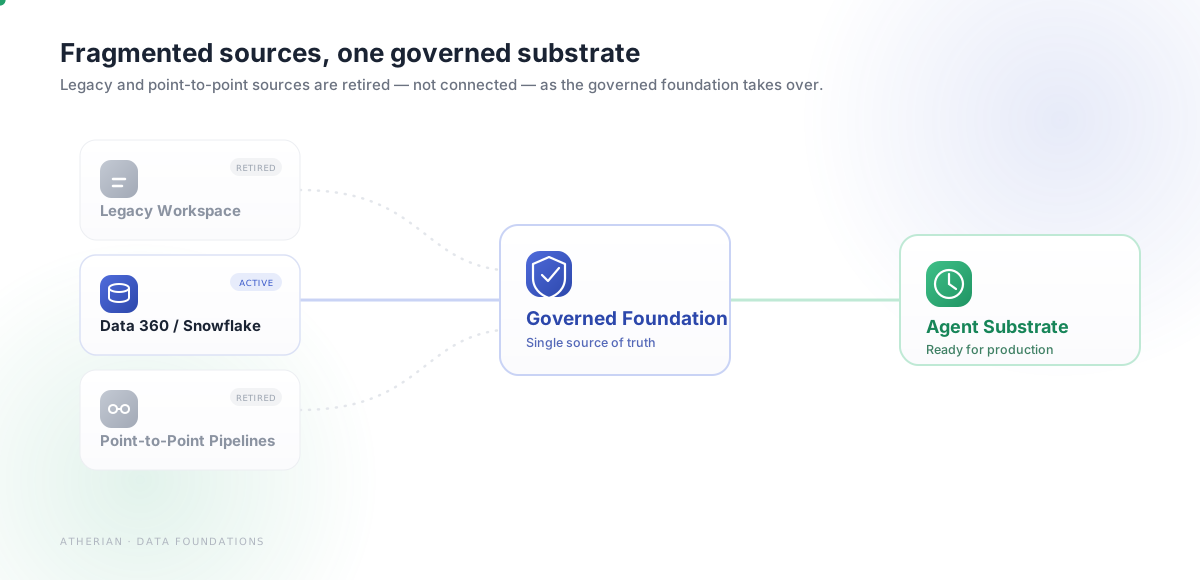
The problem. Data Cloud (Data 360) and adjacent platforms like Snowflake promise a unified customer data layer — but most orgs get there with duplicate models, unclear zero-copy boundaries, and pipelines nobody fully owns. Layer agentic AI on top of that and every failure mode compounds.
Where it's urgent right now. Salesforce moved Heroku to a sustaining-engineering model in February 2026 and closed new enterprise contracts. Existing workloads aren't broken today, but teams building new architecture on Heroku are building on a platform Salesforce has stopped investing in. That's a live migration-planning conversation, not a hypothetical one.
Our approach.

02 / Salesforce
Sales and Service capabilities designed around the work your teams and customers need to accomplish.
The problem. Salesforce programs lose value when platform configuration outruns process clarity, ownership, adoption, and data quality. More features cannot repair fragmented work or unclear accountability.
Where we focus. Sales, Service, Financial Services Cloud, Data 360, platform architecture, and operating-model improvement across Health and Life Sciences, Higher Education, Manufacturing, and Financial Services.
Our approach.
03 / AI
Agentforce and enterprise AI designed, governed, and evaluated for production work.
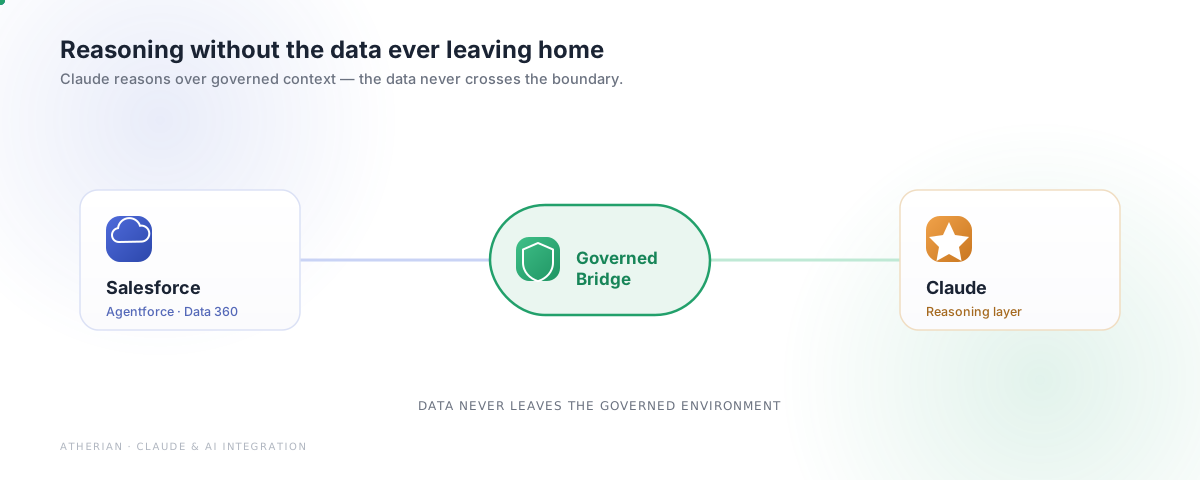
The problem. Most AI pilots demonstrate technical possibility without establishing workflow ownership, trusted grounding data, evaluation thresholds, or the human accountability needed to operate safely at scale.
Where it fits. We select the right combination of Agentforce, platform-native AI, and external models such as Claude based on the business decision and workflow—not vendor preference.
Our approach.
Most business challenges touch more than one practice area. Start with the outcome and we will help identify the right path.
